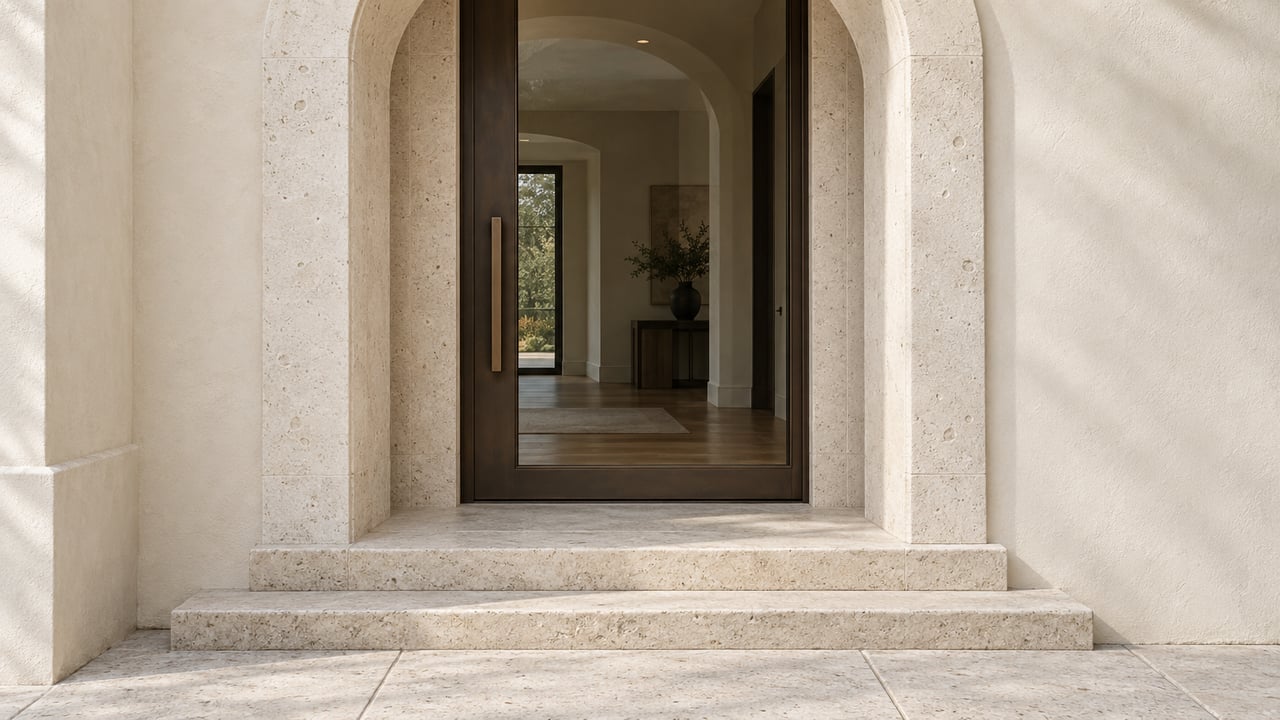
A homeowner in Palos Verdes Estates was facing more than $10,000 in fines this year for exterior changes he never made. The work was already on the house when he bought it two years ago. According to a March 2026 ABC7 investigation into the city's Art Jury, that homeowner, Jim Sheriff, described a review body that polices details most people would never think to ask about before closing.
"They will regulate things that are not visible to any neighbor, anybody, and they can't see," Sheriff told the station.
His experience shows how easily the paperwork behind an exterior can go unexamined at purchase. Most buyers assume that once a house has a certificate of occupancy and a city permit on file, the exterior is settled. In Palos Verdes Estates, it isn't. The city's building department signs off on how a structure was built. A separate, private body called the Art Jury has to sign off on how it looks, and that approval attaches to the property itself rather than to whoever happened to do the work. If a prior owner painted the trim the wrong shade, swapped a window without filing paperwork, or built a patio cover that never got reviewed, the liability doesn't stay with them. It moves with the deed to whoever buys next.
Two Approvals, One Deed
The Palos Verdes Homes Association administers the Art Jury, and its authority predates the city it oversees. The Basic Protective Restrictions were recorded in 1923, sixteen years before Palos Verdes Estates incorporated as a city in 1939. Founding architect Myron Hunt, who also designed the Malaga Cove Library, helped shape the original design standards the Art Jury still applies today.
That timeline matters because it explains why this isn't a normal homeowners association. You can't vote to dissolve it, opt out of it, or negotiate around it in an offer. The requirement comes from a restriction recorded against the land itself, not a contract an owner signs when they move in. Every property in Palos Verdes Estates, along with the Miraleste neighborhood inside neighboring Rancho Palos Verdes, falls under its jurisdiction. Two separate cities, one shared architectural authority, covering roughly 5,500 properties combined.
The city's building and safety department enforces construction codes: structural integrity, electrical, plumbing, grading. The Art Jury reviews something different: whether the finished exterior looks right for the neighborhood. Neither approval substitutes for the other. A homeowner can hold a valid city permit and still be out of compliance with the Art Jury, or the reverse. Both records need to exist before a sale closes cleanly.
What Actually Triggers a Review
The list of changes that require Art Jury sign-off is broader than most new owners expect. It covers additions and second stories, new construction, accessory buildings and detached garages, exterior material changes like stucco or roofing, and repainting in a color that differs from what was previously approved. Even routine maintenance can trigger it if the finished result changes the look of the house from the street.
This is where the friction starts for someone who just wants to repaint a house they bought six months ago. The prior owner's approved color scheme is on file with the association, and painting outside that palette without a new review puts the current owner in the position of correcting someone else's choice, or defending a change they didn't realize needed permission in the first place.
The Timeline Nobody Puts on a Listing Sheet
Simple projects, the kind involving an exact replacement of an already-approved window or door, can clear the Art Jury in two to eight weeks from a complete submittal. Larger work moves at a different pace entirely. Additions, second stories, new homes, and grading projects often take three to nine months and multiple rounds of review. One general contractor with two decades of experience on the Peninsula has said that plans submitted to the Art Jury typically require three to four times more drafting time than a comparable project in almost any other municipality, because the level of detail expected in elevations and material notations runs well beyond a standard building department submittal.
For a buyer evaluating a fixer, that timeline is a planning number, not a footnote. A remodel that would take four months in most South Bay cities can realistically run into a full year here once drafting, Art Jury review cycles, and city permitting are stacked in sequence. For a seller who started an addition and listed before it was finished, it's a disclosure problem: the buyer is inheriting an open review, not a completed one.
The Fine That Isn't Yours
The part of this system that catches people off guard isn't the process itself. It's who ends up paying for someone else's mistake. Unpermitted or unapproved exterior work can result in the association placing a lien on the property, which clouds title for a future sale or refinance regardless of who did the original work. That's the mechanism behind stories like Sheriff's: the fine attaches to the address, and the current owner is the one responsible for resolving it once the association identifies the violation.
The Palos Verdes Homes Association publishes a document specifically titled a Notice to Prospective Home Buyers, distributed through its own resources page. Its existence is itself a signal. The association has seen enough closings go through without buyers understanding what they were taking on that it created a standing document to try to close the gap before escrow, not after.
For anyone buying a home here, the practical takeaway is to request Art Jury approval records and city permits during due diligence, the same way you'd request a roof certification or a termite report. For anyone selling, it means gathering that paperwork before listing rather than after an inspection contingency surfaces a gap. A completion and compliance inspection, the kind the association itself lists among its standard applications, can confirm before closing whether a home's exterior work matches what was actually approved.
Two Cities, One Line on the Map
The jurisdiction boundary adds one more wrinkle worth knowing before you write an offer. The Art Jury governs all of Palos Verdes Estates and the Miraleste neighborhood, which sits inside the separate city of Rancho Palos Verdes. It does not govern the rest of Rancho Palos Verdes, nor Rolling Hills or Rolling Hills Estates, which each answer to their own review process. Two homes a few minutes apart on the Peninsula can sit under entirely different design authorities, and the only way to know which rules apply to a specific address is to confirm it directly rather than assume based on the surrounding streets.
If my change isn't visible from the street or a neighboring property, do I still need approval? The Art Jury's authority covers the external aesthetic appearance of structures and properties broadly, and its review has extended to details some homeowners argue aren't visible to anyone. Assuming a change is too minor to require review is the assumption that leads to fines after the fact.
I'm buying a home with an addition. How do I confirm it was actually approved? Request the Art Jury approval records and city permits for any visible exterior work during your due diligence period, and consider requesting a completion and compliance inspection before closing if the listing history suggests recent exterior changes.
Does a valid city building permit mean I'm covered? No. The city and the Art Jury review different things, and a project can hold a valid permit from one while still lacking approval from the other. Both records need to be in place, and gathering them is a normal part of preparing a home for sale on the Peninsula.
The paperwork behind a Palos Verdes Estates exterior is part of what you're buying, whether or not it shows up in the listing photos. If you're weighing a purchase here, or preparing a home for sale and want to know what's actually on file before a buyer's inspector finds it first, Schneider Properties can help you sort out what needs attention before it becomes someone else's problem to solve.